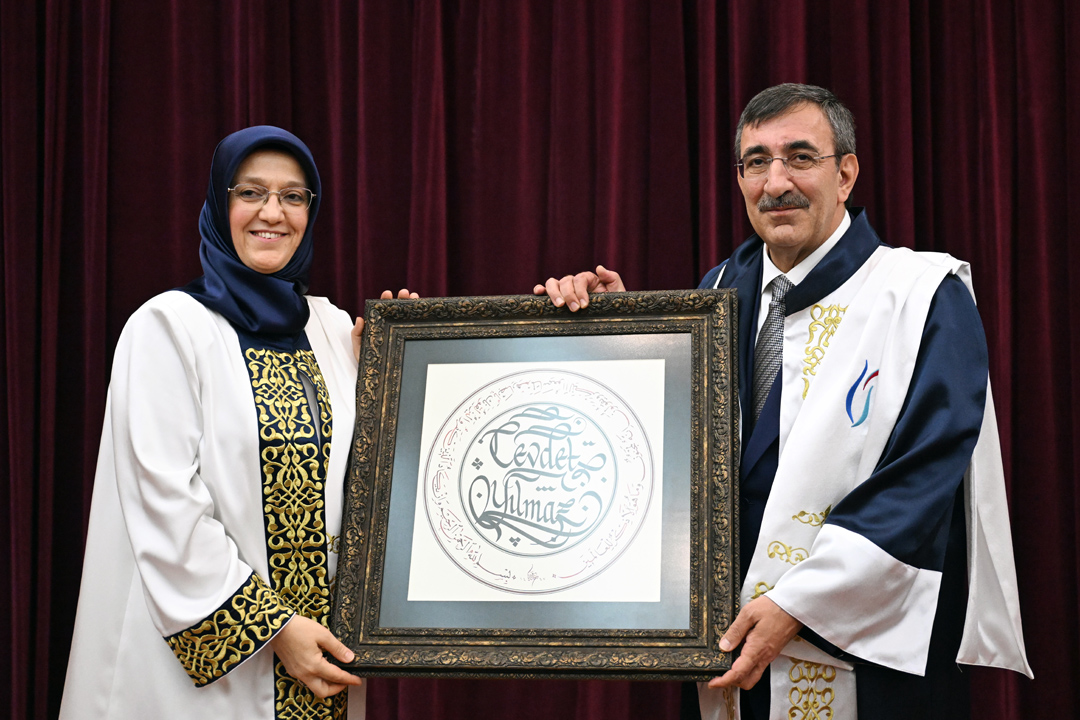
Manisa Celal Bayar University 2025–2026 Academic Year Opening Ceremony Held with the Participation of Vice President Cevdet Yılmaz
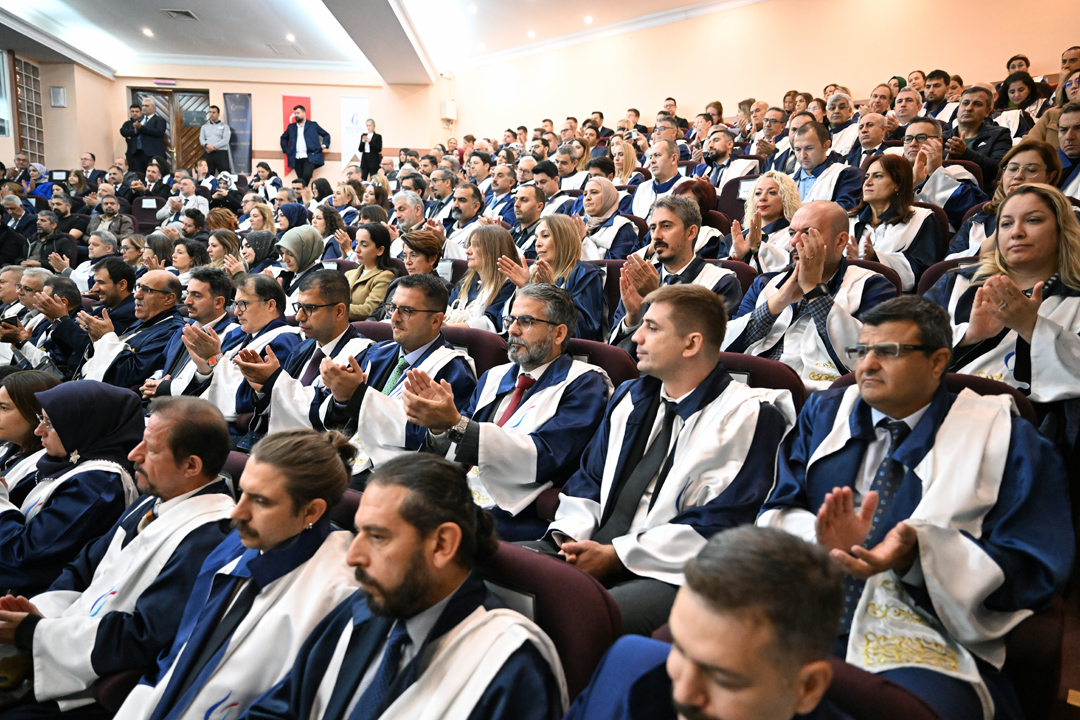
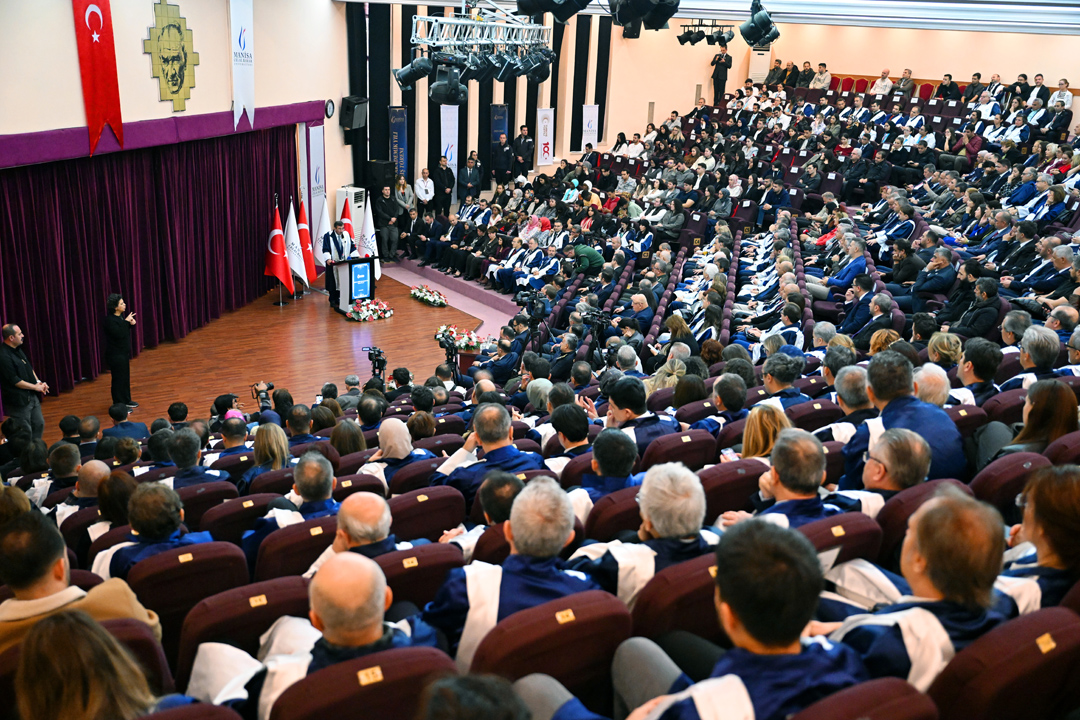
Manisa Celal Bayar University commenced the 2025–2026 academic year with a magnificent opening ceremony. The event, held at the Süleyman Demirel Culture Center on the Uncubozköy Health Campus, was graced by the presence of the Vice President of the Republic of Türkiye, Cevdet Yılmaz, as the guest of honor. Among those attending were Presidential Secretary-General Hakkı Susmaz; AK Party Deputy Group Chair and Member of Parliament Bahadır Nahit Yenişehirlioğlu; AK Party Manisa MPs Murat Baybatur, Tamer Akkal, and Ahmet Mücahit Arınç; Manisa Governor Vahdettin Özkan; Manisa Metropolitan Mayor Besim Dutlulu; Rector Prof. Dr. Rana Kibar; vice rectors; deans; directors; local protocol members; academic and administrative staff; students; guests; and members of the press.
The program began with a moment of silence and the singing of the Turkish National Anthem, followed by the university’s introductory film. A musical performance by the Faculty of Fine Arts, Design, and Architecture’s Music Department faculty members and students then added color to the ceremony.
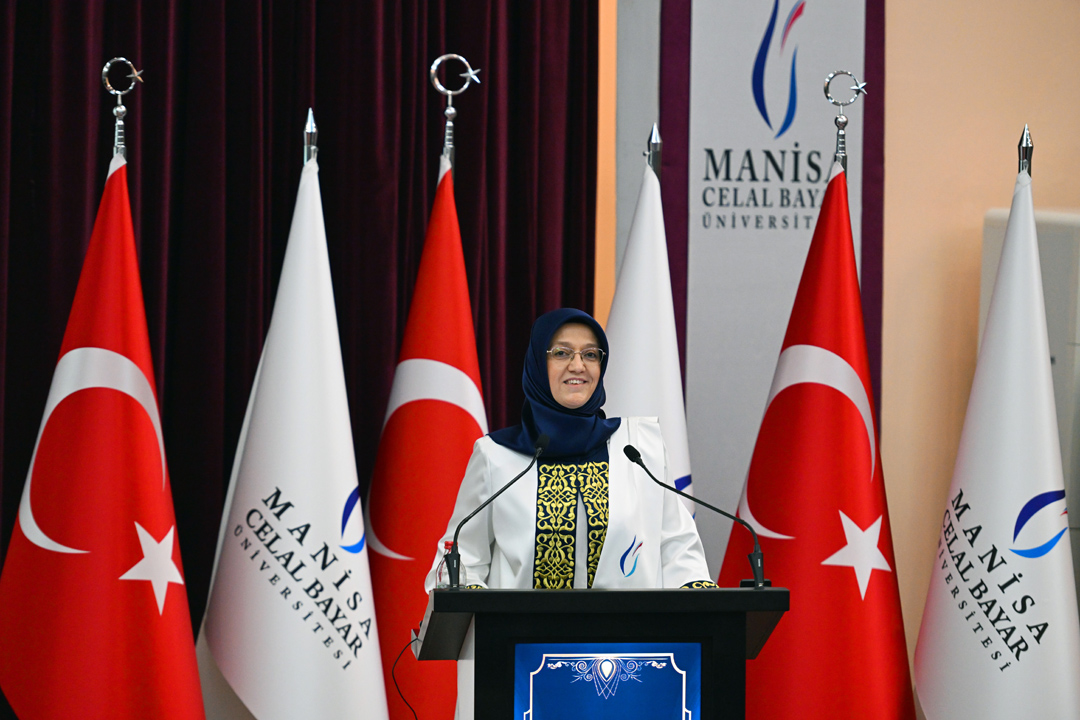
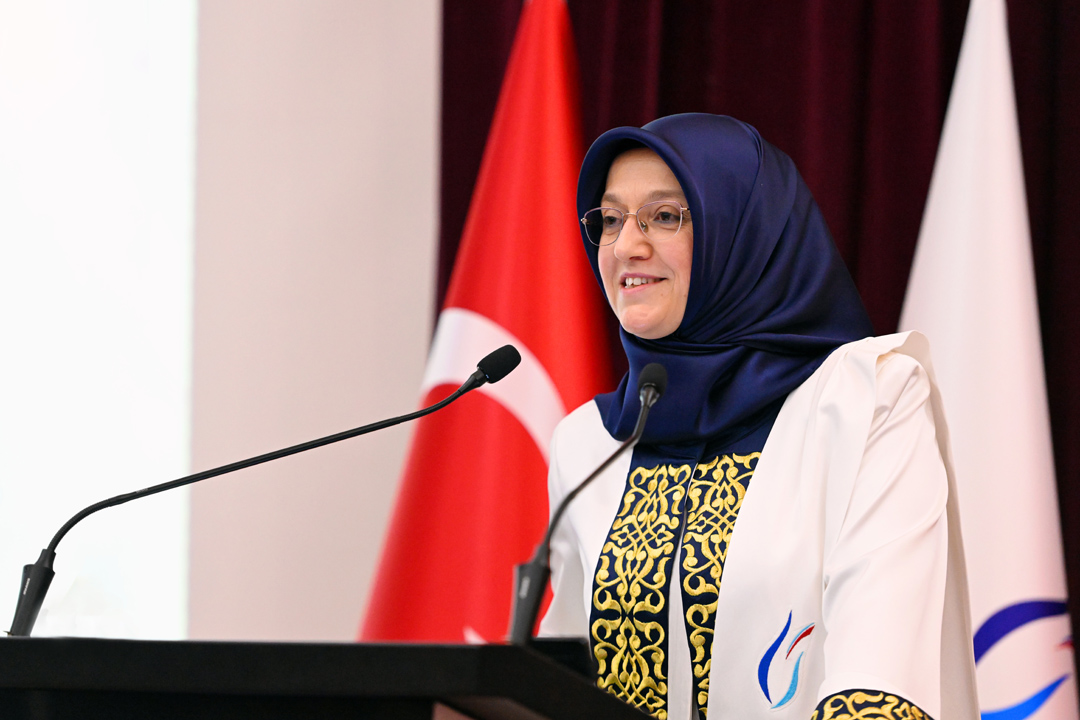
In her opening speech, Rector Prof. Dr. Rana Kibar expressed her pleasure in welcoming Vice President Cevdet Yılmaz to the university. She drew attention to the humanitarian tragedy in Palestine and Gaza, emphasizing that under the leadership of President Recep Tayyip Erdoğan, Türkiye continues to stand with the people of Gaza and contribute to the peace process. “As a university, we begin the 2025–2026 academic year by saying ‘We stand with Gaza,’” she said.
Rector Kibar provided an overview of the university’s current status and activities: “As seen in our introduction video, we take pride in being a steadily developing higher education institution. In the 2025 university placement results, Manisa Celal Bayar University achieved a 100% occupancy rate and significantly raised its base scores. In line with the demands of the age, we have opened new departments focused on artificial intelligence, big data, and digitalization.”
Highlighting that the university ranks among Türkiye’s top 20 universities with 32 accredited programs, Rector Kibar added, “We are proud to be among the institutions receiving a full five-year institutional accreditation from the Higher Education Quality Council for the first time. This confirms the quality of our education and research capacity.”
She also mentioned the ongoing operating room expansion project at the university hospital: “With the support of the Presidency of Strategy and Budget, we are increasing the number of operating rooms to 19. This will provide our physicians with a more comfortable working environment and our patients with more modern treatment facilities.”
Referring to collaborations with TUSAŞ (Turkish Aerospace Industries) and ENERJİSA Üretim, Kibar noted that new research laboratories in aerospace defense systems and energy production allow students to engage in hands-on learning. “With our new energy technologies program—comprising 25 female and 25 male students—we also aim to support women’s employment,” she said.
She emphasized that one of the university’s strongest assets is its “Workplace-Based Vocational Training Program,” enabling students to gain field experience before graduation. She also announced that a new studio established through an EU-funded project within the Faculty of Communication has begun operating, and MCBÜ Radio has launched its web broadcasts.
Concluding her remarks, Rector Kibar stated, “We are the heirs of a deep-rooted legacy and a great civilization. Drawing strength from our forebears, we aim to elevate Manisa Celal Bayar University to the level of a research university.”
The program continued with the Honorary Professorship Certificate Ceremony. Rector Prof. Dr. Rana Kibar presented Vice President Cevdet Yılmaz with an Honorary Professorship Certificate in recognition of his outstanding contributions to Türkiye’s foreign relations, economy, planning, and governance.
Taking the podium afterward, Vice President Cevdet Yılmaz expressed his pride and gratitude for receiving the honorary title from the university.
Emphasizing the significance of the Republic’s 102nd anniversary, Yılmaz stated that Türkiye’s goals for its second century are far greater: “We see the second century of our Republic—the Century of Türkiye—as the beginning of a more prosperous and influential era on a global scale. From defense and economy to education and agriculture, we are advancing in every field, and at the heart of this progress lies our most valuable resource—our human capital.”
Highlighting the centrality of human-centered development, Yılmaz said, “If there is humanity, there is everything. Humanity is the key to all. Investing in our people and improving their quality is the most critical factor for success in every field. For this reason, we have allocated the largest share of our resources to education. Today, we provide higher education services through 129 state and 79 foundation universities across 81 provinces.”
He emphasized that the Century of Türkiye vision is not merely a slogan but a comprehensive development initiative: “Within this vision that will define the century, we are taking strong steps in all fields—from defense and economy to education, agriculture, energy, and foreign policy. At the core of this collective progress lies our nation’s most valuable power—our human capital.”
Drawing attention to equal opportunity in higher education, Yılmaz said, “The Republic offers equal opportunities to everyone, regardless of where you are born or the family you come from. Our duty is to strengthen this equality.”
He also stressed the importance of artificial intelligence, big data, and the green transformation: “Artificial intelligence will reshape how existing professions are practiced. Our universities will be at the center of this transformation.”
Yılmaz described the three core functions of universities as education, research, and development: “Education transmits humanity’s accumulated knowledge to future generations, research advances knowledge, and development applies it to solve societal problems, enhance welfare, and drive change. Universities that fulfill these three functions successfully are truly successful institutions.” He emphasized that the development function is closely linked to university–community relations, adding that universities must remain open-minded and engage with all sectors of society.
Reaffirming the Presidency’s commitment to enhancing quality, equality, and innovation in higher education, Vice President Yılmaz concluded: “Our goal is for our universities to become institutions that compete globally, produce original knowledge, and use technology and science in service of humanity. I wish our university community, students, and academic staff a productive, successful, and collaborative academic year.”
The ceremony concluded with an award presentation to Prof. Dr. Fatih Selimefendigil from the Faculty of Engineering and Natural Sciences, Department of Mechanical Engineering, who was recognized for being among the world’s most influential scientists both in career-long and annual impact categories.